Skip to content

Trek Trek

Description / nameInput element
Container Registry
Container Configuration Root Path
Timezone
User ID
Group ID
Trek Host Port
Trek /config Path

Build Status Last Commit

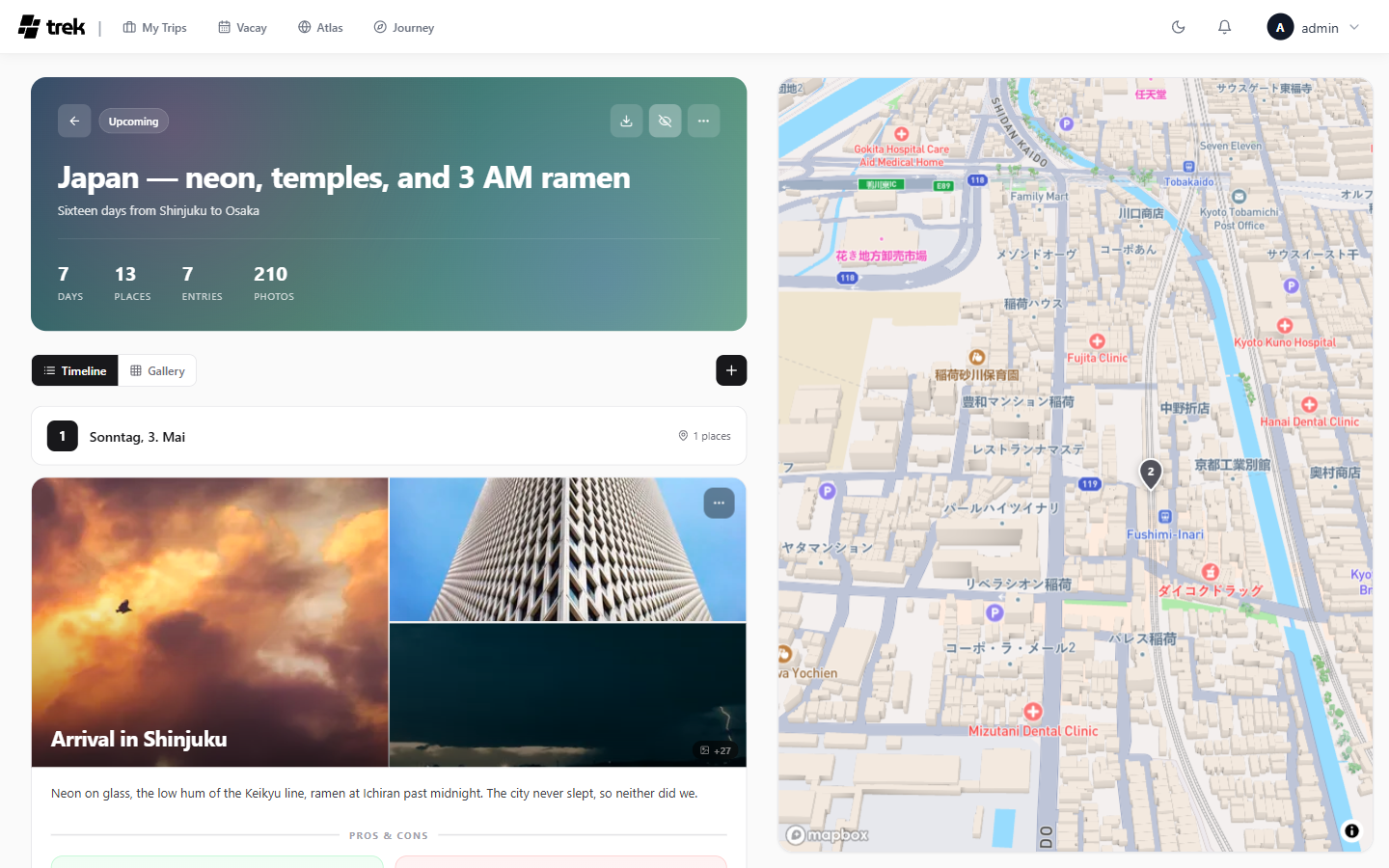
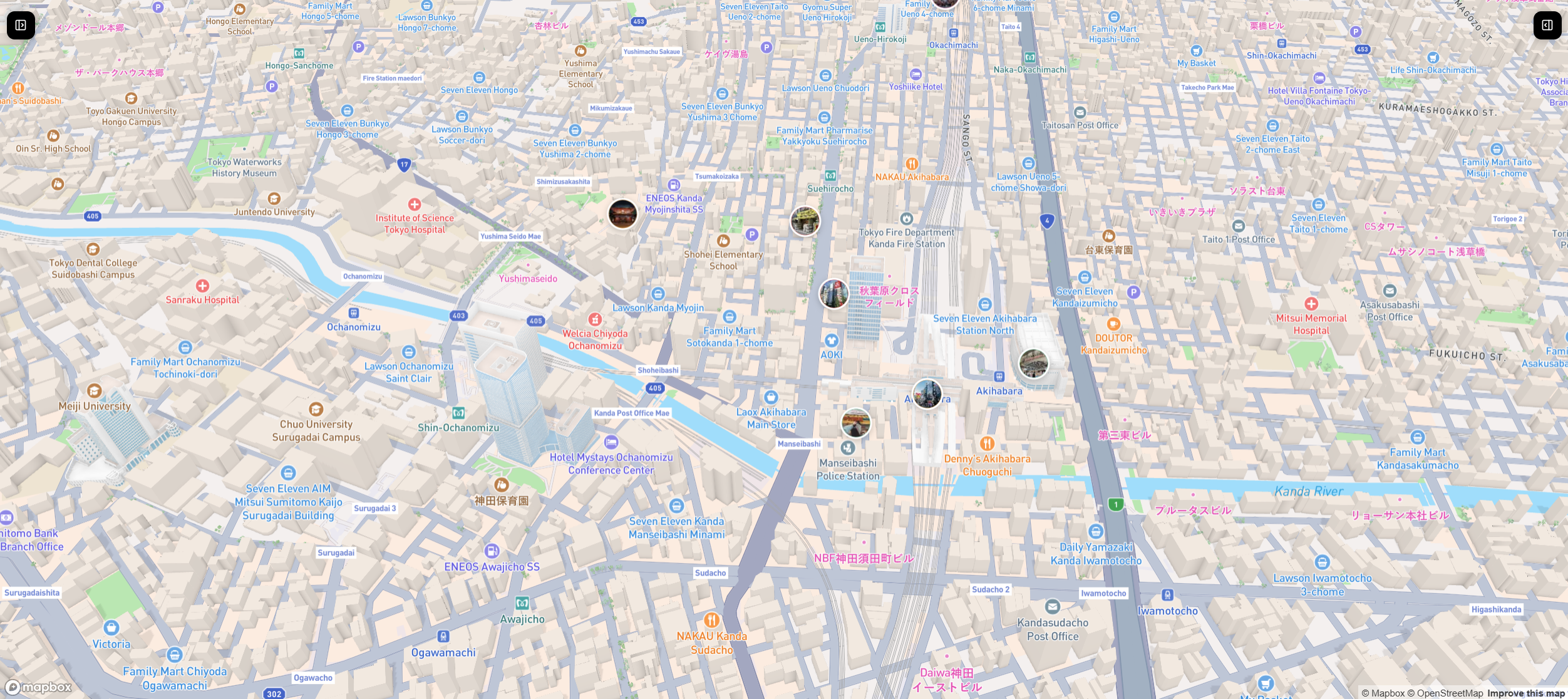
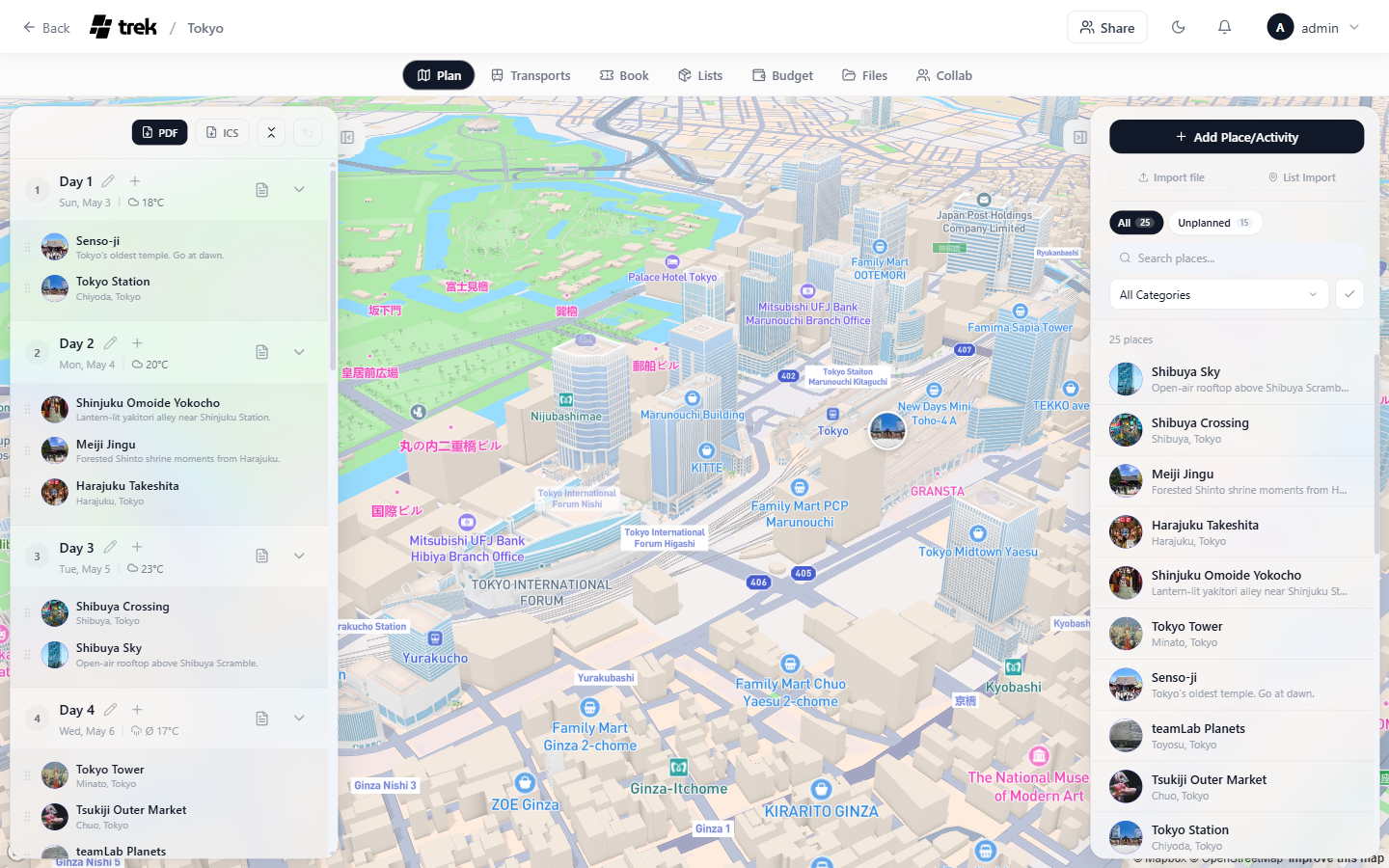
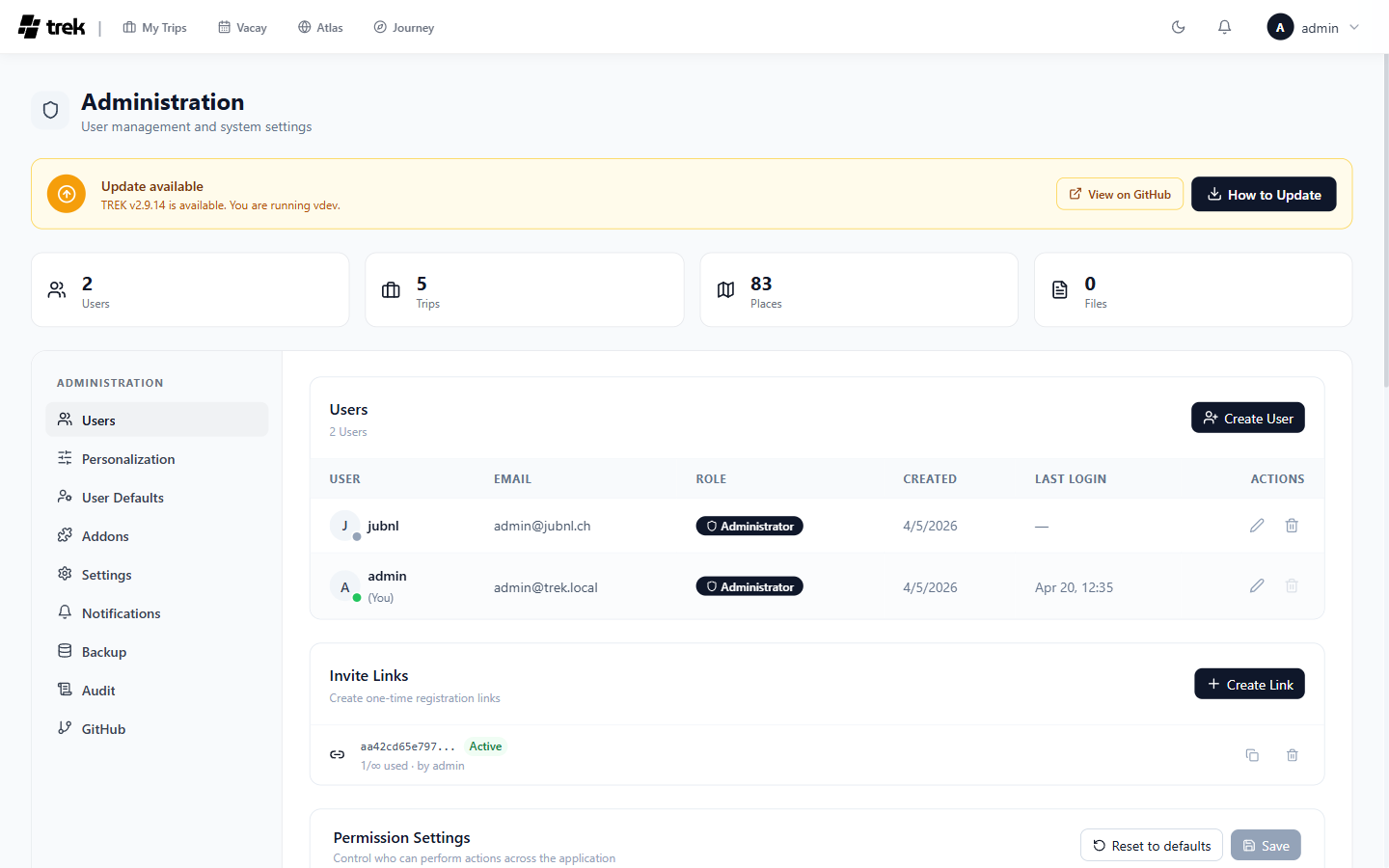
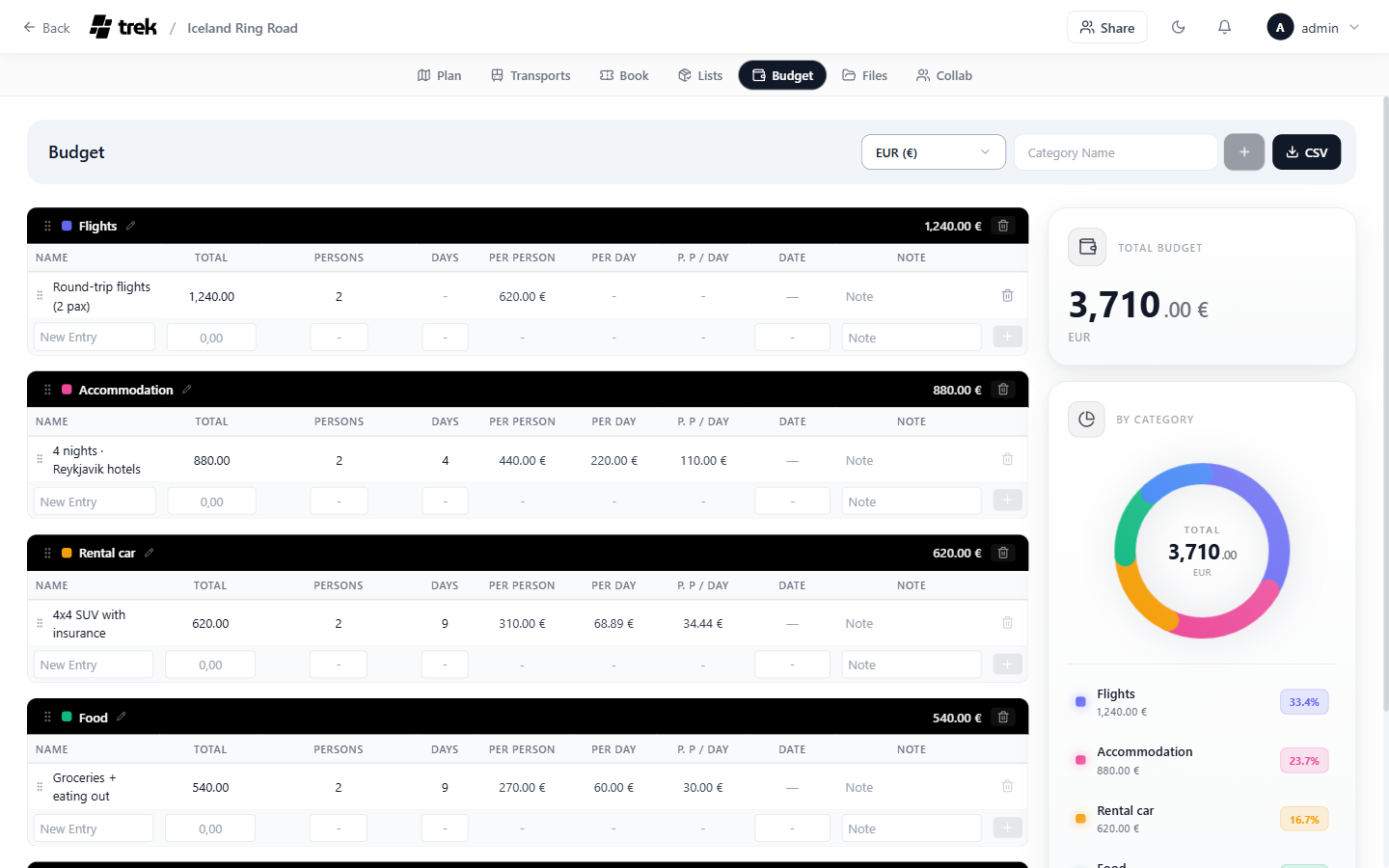
Self-hosted travel/trip planner with real-time collaboration, interactive maps, PWA support, SSO, budgets, and packing lists.
Port 3000
Registry ghcr.io/daemonless/trek
Daemonless daemonless/trek
Source mauriceboe/TREK
Website liketrek.com

Version Tags

Tag Description Best For
latest Built from the latest upstream TREK source release. Most users — recommended.

Before deploying, ensure your host environment is ready. See the Quick Start Guide for host setup instructions, including the security model for host vs. container privileges.

Deployment

services:
  trek:
    image: "ghcr.io/daemonless/trek:latest"
    container_name: trek
    environment:
      - PUID=1000  # User ID for the application process
      - PGID=1000  # Group ID for the application process
      - TZ=UTC  # Timezone for the container
    volumes:
      - "/path/to/containers/trek:/config"
    ports:
      - "3000:3000"
    # always (not unless-stopped) so FreeBSD's podman rc.d auto-starts it at boot
    restart: always

Save as compose.yaml, then run podman-compose up -d.

1
2
3
4
5
6
7
podman run -d --name trek \
  -p 3000:3000 \
  -e PUID=1000 \
  -e PGID=1000 \
  -e TZ=UTC \
  -v /path/to/containers/trek:/config \
  ghcr.io/daemonless/trek:latest

Save as run.sh, then run sh run.sh.

- name: Deploy trek
  containers.podman.podman_container:
    name: trek
    image: "ghcr.io/daemonless/trek:latest"
    state: started
    restart_policy: always
    env:
      PUID: "1000"
      PGID: "1000"
      TZ: "UTC"
    ports:
      - "3000:3000"
    volumes:
      - "/path/to/containers/trek:/config"

Save as trek-deploy.yaml, then run ansible-playbook trek-deploy.yaml.

1
2
3
4
5
6
# .env

DIRECTOR_PROJECT=trek
PUID=1000
PGID=1000
TZ=UTC
# appjail-director.yml

options:
  - virtualnet: ':<random> default'
  - nat:
services:
  trek:
    name: trek
    options:
      - container: 'boot args:--pull'
      - expose: '3000:3000 proto:tcp'
    oci:
      user: root
      environment:
        - PUID: !ENV '${PUID}'
        - PGID: !ENV '${PGID}'
        - TZ: !ENV '${TZ}'
    volumes:
      - TREK_CONFIG_PATH: /config
volumes:
  TREK_CONFIG_PATH:
    device: '/path/to/containers/trek'
1
2
3
4
5
6
# Makejail

ARG tag=latest

OPTION overwrite=force
OPTION from=ghcr.io/daemonless/trek:${tag}

Save the files above, then run appjail-director up.

appjail oci run -Pd \
  -o overwrite=force \
  -o container="args:--pull" \
  -o virtualnet=":<random> default" \
  -o nat \
  -o expose="3000:3000 proto:tcp" \
  -e PUID=1000 \
  -e PGID=1000 \
  -e TZ=UTC \
  -o fstab="/path/to/containers/trek /config <pseudofs>" \
  ghcr.io/daemonless/trek:latest trek

Save as run.sh, then run sh run.sh.

Experimental

Bastille's OCI support is experimental. It requires buildah, shares the host network stack (inherit), and persists image-declared volumes under --data-path.

1
2
3
4
5
6
7
8
9
services:
  trek:
    image: "ghcr.io/daemonless/trek:latest"
    container_name: trek
    network_mode: host  # jail shares host networking
    environment:
      - PUID=1000
      - PGID=1000
      - TZ=UTC

Save as podman-compose.yml, then run bastille up.

1
2
3
4
5
6
bastille create -O \
  --env PUID=1000 \
  --env PGID=1000 \
  --env TZ=UTC \
  --data-path /path/to/containers/trek \
  trek ghcr.io/daemonless/trek:latest inherit

Access at: http://localhost:3000

Interactive Configuration

Parameters

Environment Variables

Variable Default Description
PUID 1000 User ID for the application process
PGID 1000 Group ID for the application process
TZ UTC Timezone for the container

Volumes

Path Description
/config Configuration directory

Ports

Port Protocol Description
3000 TCP Web UI

Implementation Details

  • Architectures: amd64
  • User: bsd (UID/GID set via PUID/PGID). Defaults to 1000:1000.
  • Base: Built on ghcr.io/daemonless/base (FreeBSD 15.1).

Need help? Join our Discord community.